Settings
 Fast Delivery
 Payment Types


 Marketplace Product
Temperature Sensors
60,951 Results


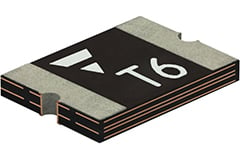


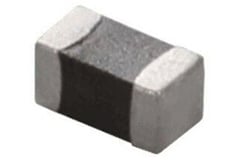


About Temperature Sensors
What Is a Temperature Sensor?
A temperature sensor is a device that detects thermal energy in its surroundings and converts that measurement into an electrical signal, typically a change in voltage, resistance, or current that a circuit or controller can read. Temperature sensors are used to monitor everything from ambient room conditions to industrial process heat, and the resulting output can be used for real-time monitoring, triggering a heater or cooling system, or feeding data into a larger control loop. Because temperature affects nearly every physical process, these sensors are found in an enormous range of applications, from consumer thermometers and HVAC systems to automotive engines, medical devices, and industrial furnaces. Sensing elements are usually paired with a probe, transmitter, or signal conditioning circuit that translates the raw physical change into a usable digital or analog output, and in many industrial or remote settings a wireless temperature sensor may be used to relay readings without the cost or vibration sensitivity of long cable runs.
Construction and Types
The construction of a temperature sensor depends heavily on its sensing technology. A thermocouple is built from two dissimilar metal wires joined at a measurement junction; the temperature difference between that junction and a reference "cold junction" generates a small voltage, making thermocouples simple, rugged, and capable of measuring very high temperature extremes, though they are comparatively less accurate and prone to drift over time. A resistance temperature detector (RTD) uses a coil or thin film of pure metal, usually platinum, whose electrical resistance changes predictably with temperature; RTDs offer excellent accuracy and stability but respond more slowly and cost more than other sensor types. Thermistors are ceramic semiconductor devices that also change resistance with temperature, but far more dramatically over a narrower temperature range. They come in two flavors: NTC (negative temperature coefficient), where resistance drops as temperature rises, and PTC (positive temperature coefficient), where resistance increases with temperature, NTC types are common for general-purpose sensing and calibration-critical applications, while PTC types are often used for overcurrent protection or heater self-regulation. Solid-state or IC-based sensors integrate the sensing element directly into a circuit, producing a clean digital or analog output with minimal external calibration.
Choosing Between Types
Each sensor type involves tradeoffs between accuracy, temperature range, response time, durability, and cost. Thermocouples excel in high-temperature, high-vibration environments like furnaces or engines, but sacrifice some accuracy and are susceptible to signal drift, requiring periodic calibration and careful cold-junction compensation. RTDs are generally considered the most accurate and stable solution for precision measurement and long-term reliability, making them a strong choice for laboratory, pharmaceutical, and process-control applications, though their higher cost and slower response can be limiting factors. Thermistors offer excellent sensitivity and low cost within a narrower temperature range, useful where fine resolution matters more than an extreme measurement range. When selecting a sensing solution, engineers typically weigh required accuracy, expected temperature range (in Celsius or Fahrenheit), ambient conditions, mechanical vibration, response time, and output format (analog voltage vs. digital signal) to match the right device, probe, or transmitter to the application.