Settings
 Fast Delivery
 Payment Types


 Marketplace Product

Mfr Part # DFR1294
LATTEPANDA MU ULTRA(16G RAM,ULTR
DFRobot

Single Board Computers LattePanda
We've spent the last few years watching AI move from research labs into everyday projects. What started with simple object detection and speech recognition has evolved into local language models, advanced computer vision, intelligent automation, and autonomous robotics.

At the same time, many projects have grown beyond simple proof-of-concept builds. A home automation server gains additional sensors and services. A robotics project adds computer vision. A security camera becomes a full NVR with AI-powered object detection. Before long, you're not just building a project anymore. You're designing a complete system.
That's where the LattePanda Mu Ultra enters the conversation.
Powered by Intel's Core Ultra 200V Series processors, the LattePanda Mu Ultra combines a CPU, GPU, and dedicated NPU in a compact compute module designed for edge AI applications. With up to 115 TOPS of AI performance, support for Windows 11 and Ubuntu, and a wide range of expansion options, it's intended for those looking to bring more advanced AI capabilities directly into their projects.
One of the first things that stood out about the Mu Ultra is that it feels less like a traditional development board and more like a building block.
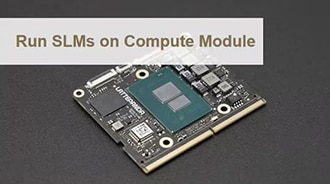
Rather than existing as a complete standalone system, the Mu Ultra is designed as a compute module. At just 60 mm × 69.6 mm, it contains the processing, memory, and AI acceleration resources needed for demanding workloads while relying on a carrier board to provide the specific I/O, storage, and expansion options required for a given application.
The compute module itself exposes a variety of interfaces, including PCIe, USB, UART, I2C, and GPIO, allowing it to integrate with custom carrier boards and specialized hardware. The platform also supports multiple displays and high-speed storage options through compatible DFRobot carrier boards.
Available configurations feature either an Intel Core Ultra 5 226V or Intel Core Ultra 7 256V processor, paired with 16GB of LPDDR5X memory, Intel Arc graphics, and Intel AI Boost NPU acceleration. Depending on the model, the platform can deliver between 97 and 115 TOPS of AI performance.

The new Mini Carrier Board expands those capabilities further with features such as:
That means the same system can serve as a desktop development platform one day and become embedded inside a custom project the next.

Many of today's AI applications rely on cloud-based resources. That's a perfectly valid approach, but there are situations where local processing offers significant advantages.
For example:
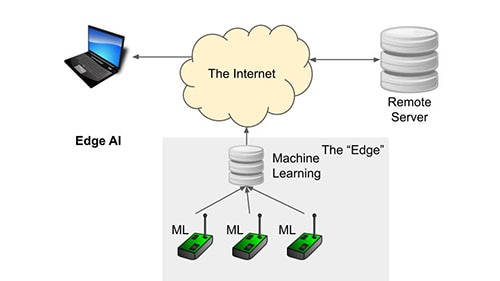
The Mu Ultra was designed with these types of workloads in mind. By combining CPU, GPU, and NPU resources into a single platform, it provides the foundation for running AI inference, computer vision, data analysis, and automation workloads directly on the device itself.
I think the most interesting question isn't "What are the specifications?" but rather:
Here are a few applications that immediately came to mind.
Modern security systems increasingly rely on computer vision for object detection, event classification, and intelligent notifications.
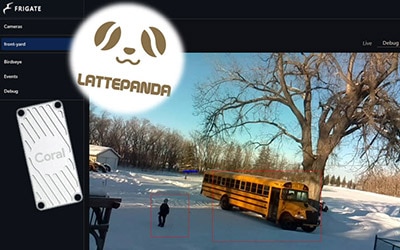
A platform, such as Frigate NVR, capable of handling multiple camera streams alongside local AI inference could serve as the foundation for a privacy-focused network video recorder, allowing video processing and analysis to remain local rather than relying on external services.
The home automation community has embraced local control for everything from lighting to environmental monitoring.
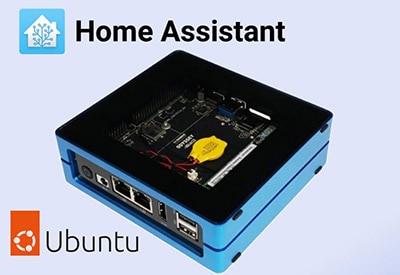
The Mu Ultra's AI capabilities make it an intriguing option for those interested in local speech recognition, voice assistants, natural language processing, or more advanced Home Assistant integrations without requiring cloud connectivity for every interaction.
Robotics workloads often combine a surprising number of technologies:
The combination of hardware AI acceleration and traditional I/O interfaces such as UART, I2C, and GPIO makes the Mu Ultra a natural fit for advanced robotics projects.
Automatic inspection systems are becoming increasingly accessible to smaller organizations and independent developers.
Applications such as object classification, defect detection, and visual verification can benefit from local AI inference while maintaining low-latency operation directly at the edge.
One application area I continue to find fascinating is intelligent environmental monitoring.
Whether identifying bird species, monitoring pollinators, tracking wildlife activity, or analyzing environmental changes, local AI can reduce the data that needs to be stored or transmitted while allowing systems to respond immediately to events of interest.
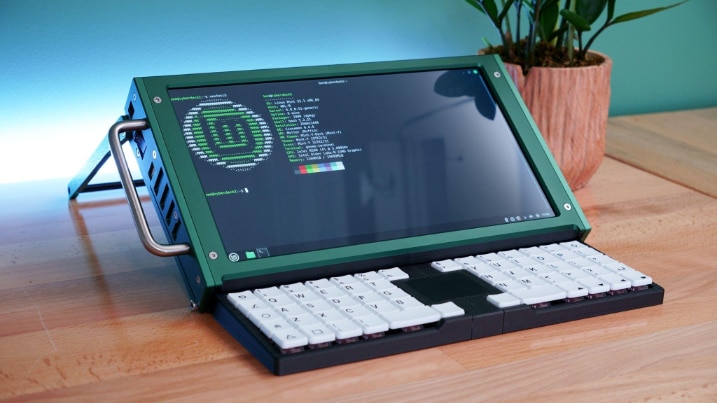
Because the Mu Ultra supports standard desktop operating systems such as Windows 11 and Ubuntu, it could also serve as the foundation for a portable AI experimentation platform for developers wanting to explore local AI inference, computer vision workflows, and machine learning deployment.
Unlike an all-in-one development platform, the Mu Ultra encourages builders to think about system architecture.
Storage, cooling, networking, power delivery, and expansion can all be tailored to the project's requirements. That flexibility comes from the compute-module approach itself. The platform supports PCIe expansion, NVMe storage, multiple USB interfaces, and additional high-speed connectivity through OCuLink-enabled carrier boards.
There are some practical considerations as well. The documentation for the LattePanda Mu Ultra notes that an appropriate heatsink is required for operation due to the compute density of the module, and storage must be provided through an SSD installed on a compatible carrier board.

In other words, this is a platform designed to become part of a system rather than exist as a standalone board. For those of us accustomed to thinking about complete systems, that's often a benefit rather than a limitation.
Not every project requires AI acceleration, multiple PCIe lanes, or a capable x86 platform sitting at the edge.
However, more of us are beginning to explore local language models, computer vision, intelligent automation, and increasingly sophisticated robotics projects. As those projects grow, the hardware requirements tend to grow with them.
The LattePanda Mu Ultra feels like the kind of platform we start looking at after we've already completed the basics and begun asking bigger questions.
Questions like:
For those exploring those questions, the LattePanda Mu Ultra offers an interesting foundation for the next generation of edge AI projects.