Settings
 Fast Delivery
 Payment Types


 Marketplace Product

What is Zigbee?
Wireless communication can account for a large portion of an IoT project’s power consumption. Battery-operated devices, in particular, often struggle with power-hungry technologies like Wi-Fi and cellular. Read on to learn how Zigbee was designed to address these challenges and why it has become a popular choice for efficient, scalable IoT systems.

Limitations of Conventional Wireless Communication Techniques
Wi-Fi, Bluetooth, and cellular are among the most popular choices for wireless communication in IoT projects. Their popularity makes them widely supported and lowers barriers to entry. However, as convenient as they may be, they often prioritize data throughput over energy efficiency, which can affect the runtime of battery-powered devices.
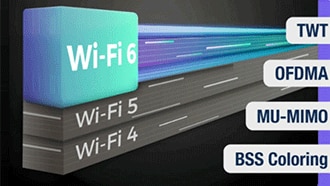
Wi-Fi in particular is optimized for high throughput and large data transfers in local networks, where devices are within close range of a central hub, such as a wireless router. The devices must maintain their connection or establish a new one each time they want to send or receive data, which is expensive in terms of power consumption. The network range is typically limited to a local area, but it can be extended using wireless repeaters or routers.
Bluetooth and BLE (Bluetooth Low Energy) are short-distance wireless communication methods that are reliable and require little power. They were primarily designed for direct, short-range communication between a small number of devices. This works well in many applications but can quickly become a scalability problem once many IoT nodes, such as sensors, are involved. One major advantage of Bluetooth is that it typically does not require an external coordinator, as devices communicate directly with each other in a point-to-point manner.
Similar to Wi-Fi, cellular communication typically favors high throughput over energy efficiency. Although this method does not require a central coordinator, it comes with a few unique challenges. The main ones are unreliable connectivity in remote areas, the need for a dedicated data plan, and additional, often power-hungry hardware. Similar to Bluetooth, scalability can quickly become an issue, as each node that wants to transmit or receive data must have its own data plan and cellular hardware.
How Zigbee Fits Into the IoT Landscape
Zigbee is a protocol that adds networking, security, and application layers on top of the IEEE 802.15.4 standard. The standard itself defines low-level characteristics, such as radio frequencies, channels, modulation, and basic packet handling. Zigbee describes how devices form and operate an IoT network. Similar to Wi-Fi and Bluetooth, many Zigbee networks also utilize the 2.4GHz band. However, they differ from other popular wireless communication methods by optimizing for low power usage and scalability instead of data throughput, which is often only around 250kbps.
The specification was built with the assumption that IoT systems often contain numerous individual nodes and that most are small, low-power devices that only sporadically transmit or receive a few bytes of data. Between those exchanges, the devices do not have to keep their connection alive. They can go to sleep and wake up as needed. Typical applications include home automation, medical sensors, and traffic management systems.
Zigbee achieves low power consumption across the individual nodes by pushing most of the complexity into an external coordinator, similar to a router in a Wi-Fi network. This device is responsible for more demanding tasks, such as network formation and addressing. It often also acts as a bridge to a regular IP network, allowing IoT nodes to access the internet. Having a single, more complex coordinator allows each node to be simpler, and thus cheaper to build and more energy-efficient.
Network Topology and Device Roles
Zigbee supports multiple network topologies, with star, tree, and mesh being the most common. By introducing mesh networking capabilities, Zigbee addresses the limited range of other wireless protocols. Special mesh router nodes can relay packets between nodes and the coordinator. This extends the network’s reach, allowing devices to communicate without a direct connection to the central coordinator. In practice, this means the network can grow beyond the coordinator’s direct range, as packets are forwarded between routers until they reach their destination.
 This image compares the three network topologies Zigbee supports.
A Zigbee mesh network comprises three types of nodes: the coordinator, routers, and end devices. Each network requires exactly one coordinator. This node is always on and is typically more complex than the other devices in the network. It handles network formation and management tasks, such as assigning addresses. In many networks, the coordinator also acts as an IP bridge, allowing Zigbee devices to communicate with other networks, including the Internet.
Routers relay packets between simple nodes and the coordinator, thus extending the network’s effective range. To accomplish this, routers must be available at all times and are continuously powered on. In smart home systems, routers are typically mains-powered devices, for example, light bulbs and smart plugs.
End devices are typically simple, battery-operated nodes that sleep most of the time to conserve energy. They only wake up occasionally to transmit or receive small amounts of data before going back to sleep. Typical examples include battery-powered sensors used in smart home setups.
The Bottom Line: Strengths and Limitations of Zigbee
Due to its focus on low-power communication, Zigbee can increase the battery life of IoT devices. Its lightweight protocol and addressing scheme allow end devices to remain in their low-power sleep mode most of the time and wake up only when they need to exchange data. As a result, these nodes can remain simple, inexpensive, and only need a small battery. Instead of requiring dozens or even hundreds of complex nodes, Zigbee shifts most of the networking complexity to a single coordinator that handles the majority of network management tasks.
Router nodes can forward messages between the coordinator and the simple end devices. By doing so, they extend the network’s effective range, which helps improve coverage in challenging environments. End devices don’t all require a direct signal transmission path to the coordinator. Instead, they only need to reach the next router node.
Zigbee is also designed to be more scalable than Bluetooth or Wi-Fi, and it can support hundreds of small, low-power devices within a single network. Lastly, security is built into the protocol rather than added as an afterthought. Zigbee uses built-in AES-128 encryption to secure communication between devices.
 Zigbee was designed with scalability in mind, and it supports dozens or even hundreds of simple nodes in a network.
However, the low power requirement comes at the cost of limited data throughput, typically around 250 kbps, and shorter transmission distances. Depending on transmission power and environmental conditions, the effective line-of-sight range usually falls between ten and one hundred meters (between 33 and 330 feet). This is where Zigbee’s mesh topology becomes particularly useful, as it can greatly extend the network’s effective range without requiring more powerful transmitters.
Zigbee often shares the 2.4 GHz frequency band with Wi-Fi and Bluetooth. Signal interference is a real concern, making careful channel selection important. Nevertheless, a well-configured Zigbee network can coexist with Wi-Fi and Bluetooth without issues. Zigbee is not intended to replace these technologies. Instead, it is part of a larger IoT communication stack alongside BLE, Wi-Fi, and cellular communication.